About this guide: Honda Libertyville is a factory-authorized Honda dealer serving Lake County and Chicago's northern suburbs from 1111 S Milwaukee Ave in Libertyville. This guide was prepared by our sales team using Honda's published specifications and current EPA range ratings, with an honest look at what electric ownership actually costs and feels like through a Lake County winter. Last reviewed July 2026. EV pricing, incentives, and charging programs change quickly, so confirm current details with us before you buy.
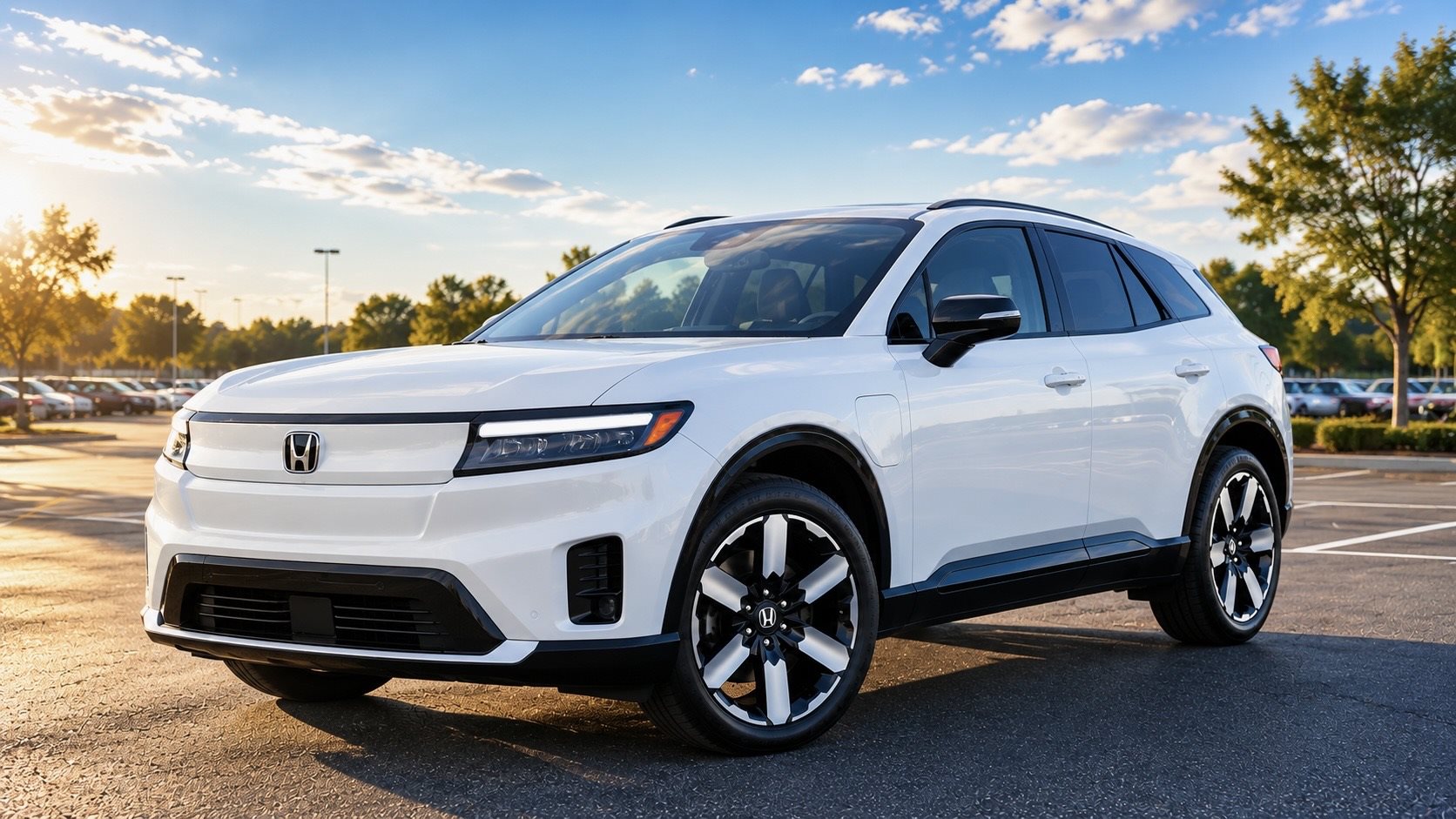
The 2026 Honda Prologue is Honda's first mass-market all-electric SUV sold in the United States: a midsize, five-passenger crossover built on an 85-kWh battery with an EPA-estimated range of up to 308 miles. It starts around $39,900 for the front-wheel-drive EX (before destination and handling, taxes, and options), and its DC fast charging can add roughly 65 miles of range in about 10 minutes. One thing to know up front: the $7,500 federal EV tax credit ended for vehicles acquired after September 30, 2025, so it no longer applies to a new Prologue purchased today. For Lake County drivers who can charge at home, the Prologue is a practical, comfortable daily EV. Here's the full picture on range, charging, and real cost.
Below we break down the 2026 Prologue lineup and specs, how far it really goes once you factor in highway speeds and Midwest winters, where and how to charge it around Lake County, the true 2026 cost of ownership now that the federal incentive is gone, how it compares to other electric SUVs, and an honest take on who should - and shouldn't - buy one.
The 2026 Honda Prologue at a Glance
The Prologue was jointly developed with General Motors and rides on GM's Ultium electric platform, which means it shares its underlying hardware with the Chevrolet Blazer EV while wearing Honda styling and coming with Honda's dealer network, warranty, and service. Every 2026 Prologue uses the same 85-kWh lithium-ion battery pack. The difference between trims comes down to drivetrain, power, features, and range.
There are three trims - EX, Touring, and Elite. The EX and Touring come standard with a single front-mounted motor (front-wheel drive) making 220 horsepower and 243 lb-ft of torque. All-wheel drive, which adds a second motor for a combined 300 horsepower and 355 lb-ft, is available on the EX and Touring and standard on the top Elite. The extra motor is worth knowing about for Lake County: dual-motor all-wheel drive adds meaningful traction confidence in snow, at the cost of a little range.
| Trim | Drivetrain | Power | EPA-Est. Range |
|---|---|---|---|
| EX | FWD standard, AWD available | 220 hp (FWD) / 300 hp (AWD) | Up to 308 mi (FWD) / 294 mi (AWD) |
| Touring | FWD standard, AWD available | 220 hp (FWD) / 300 hp (AWD) | Up to 308 mi (FWD) / 294 mi (AWD) |
| Elite | AWD standard | 300 hp | 283 mi (AWD) |
On the technology side, every Prologue comes with an 11.3-inch HD touchscreen with Google built-in, an 11-inch digital instrument display, wireless Apple CarPlay and Android Auto, and the Honda Sensing suite of driver-assist features as standard. The Elite adds 21-inch alloy wheels, which look striking but contribute to its lower 283-mile EPA range rating compared with the FWD trims. Honda covers the high-voltage battery with an 8-year/100,000-mile limited warranty, and new Prologues include Honda Service Pass complimentary scheduled maintenance for the first 2 years or 24,000 miles.
How Far Will a Prologue Really Go? Range in Lake County Reality
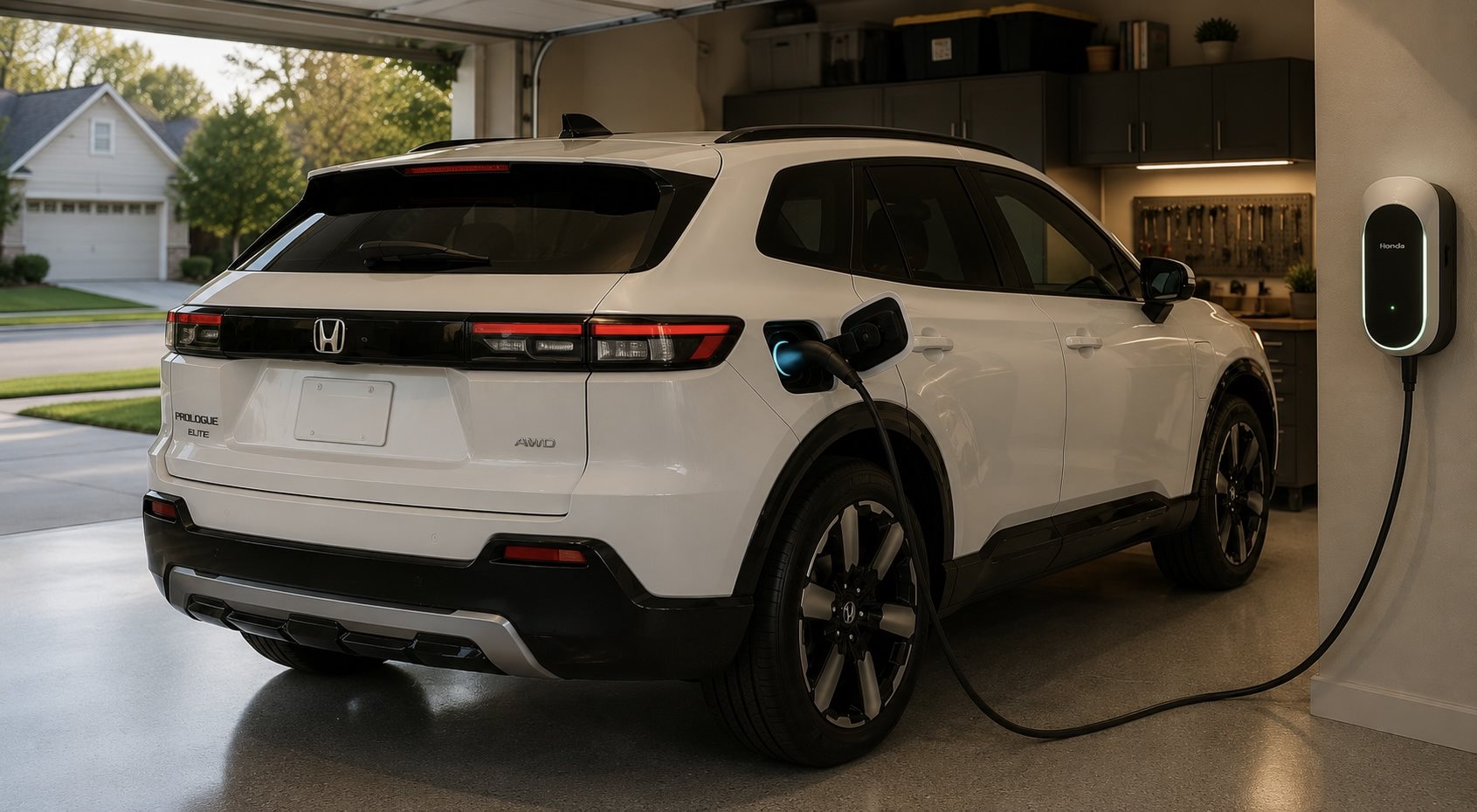
The headline number is up to 308 miles of EPA-estimated range for the front-wheel-drive EX and Touring. All-wheel-drive EX and Touring models are EPA-rated at around 294 miles, and the top Elite - with all-wheel drive and 21-inch wheels - at around 283 miles. Those are strong figures for a midsize electric SUV, and for most Lake County commuting they mean you'll charge roughly once or twice a week rather than daily.
But the EPA number is a starting point, not a guarantee - and that's true of every EV, not just the Prologue. Two things pull real-world range below the sticker, and both matter here in the northern suburbs.
Cold weather is the big one
This is the single most important thing for a Lake County EV buyer to understand, and it's the part most generic buyer's guides skip. For planning purposes, demanding winter conditions may reduce an EV's usable range by roughly 20 to 30 percent, and it can be more when you're leaning hard on cabin heat, seat heaters, and defrost during a deep January cold snap - though actual results vary substantially. The battery chemistry itself is less efficient when it's cold, and heating the cabin draws energy that, in a gas car, would come "free" from engine waste heat. So a Prologue that shows 300 miles in October might realistically deliver closer to 210 to 240 on a bitter Lake County morning.
The good news: you can blunt most of that. The most effective habit is preconditioning - using the vehicle's available remote-climate and charging-schedule features to warm the cabin (and, where supported, the battery) while it's still plugged in, drawing energy from the wall instead of the battery. Use HondaLink's remote-climate and departure-time features while the Prologue is plugged in so it can be warm and ready without spending its own range; check the 2026 owner's manual for the exact battery-preconditioning functions on your vehicle. Parking in a garage rather than in an open driveway also helps the battery start the day warmer. We walk Lake County owners through these habits at delivery, because they're the difference between "winter range anxiety" and a car that just works.
Highway speed and driving style
EVs are most efficient around town, where regenerative braking recovers energy every time you slow down. Sustained high-speed highway driving - think a run up I-94 toward Wisconsin - uses more energy per mile than the EPA combined figure suggests, often reducing range by roughly 10 to 15 percent. Aggressive acceleration and roof cargo boxes cut into it further. None of this is unique to the Prologue, but it's worth planning around if your typical week involves long interstate stretches rather than suburban errands.
Bottom line on range: For a Lake County driver whose daily round trip is well under 100 miles - commuting within the county, school runs, trips into the northern suburbs - even winter range is a non-issue with overnight home charging. If you regularly drive 200-plus miles a day or take frequent long road trips, read the charging section closely and think carefully about how fast-charging fits your routine.
Charging the Prologue: Home, Public, and Road Trips
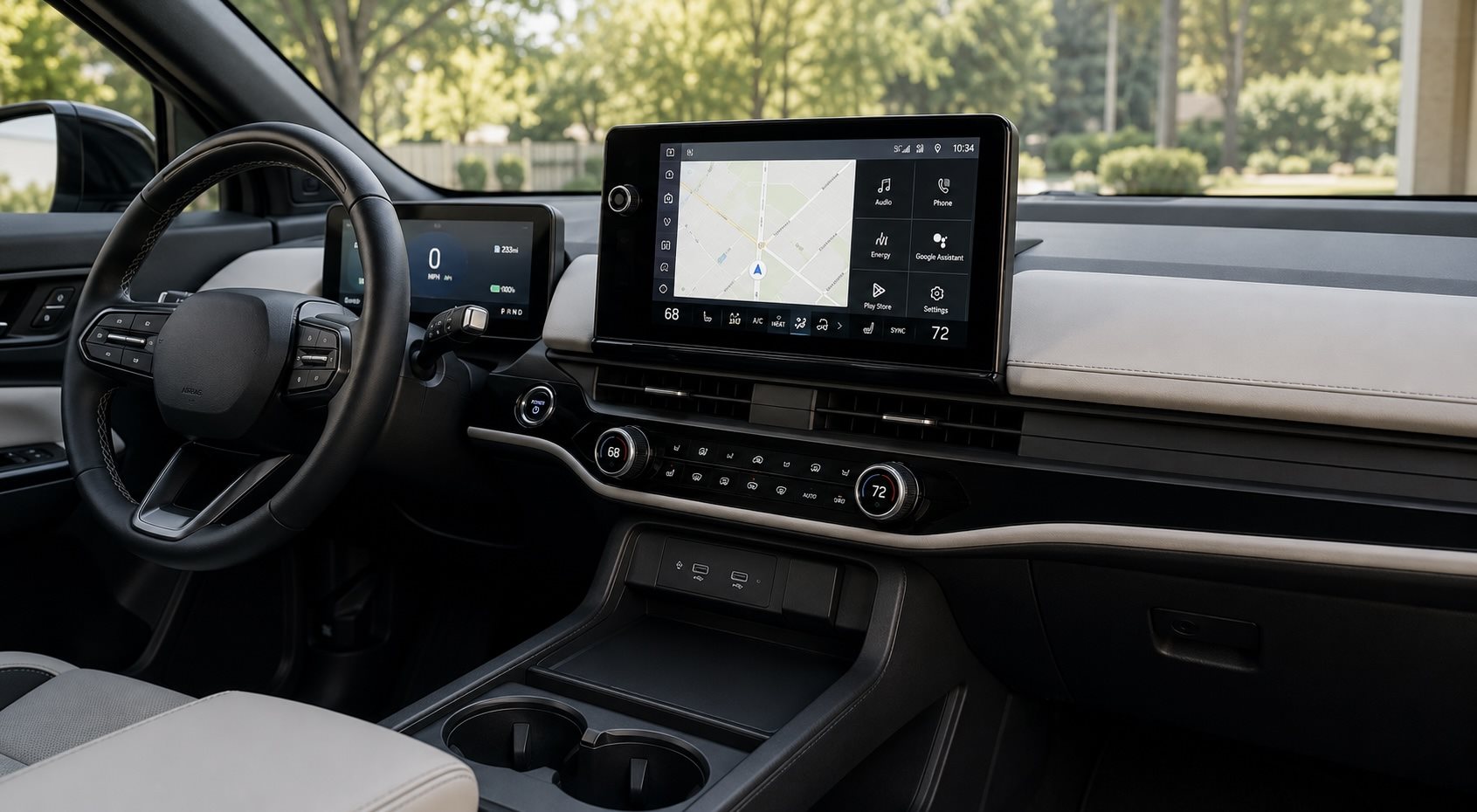
Charging is where suburban Lake County drivers actually have an advantage over city dwellers. If you have a garage or driveway, home charging turns an EV into the most convenient car you'll ever own - you leave every morning "full," and you rarely think about public chargers at all.
Home charging (the daily reality)
Every 2026 Prologue includes a portable charging kit. Eligible buyers may also be offered a choice between a home wall-mounted charging station with an installation incentive, or a sales credit when a home charger isn't needed. These packages and their eligibility change, so confirm the current terms with our team before purchase. Honda Home Electrification can help arrange the home charger and installation.
On a 240-volt Level 2 home charger, the Prologue adds up to about 34 miles of range per hour, and a full charge from low typically takes roughly 7 to 11 hours - perfect for overnight. A standard 120-volt household outlet (Level 1) is far too slow for most owners, adding only a few miles per hour, so plan on Level 2 if the Prologue will be your main vehicle. Lake County is served by ComEd, and EV-related programs or time-of-use rates may be available depending on current funding and eligibility - worth checking directly with ComEd when you set up your charger.
Public and DC fast charging
For longer days and road trips, the Prologue supports DC fast charging at rates up to 155 kW. In practice that adds up to about 65 miles of range in roughly 10 minutes, and takes the battery from about 20 percent to 80 percent in around 35 minutes - enough time for a coffee and a stretch. As with all EVs, fast charging slows down as the battery fills, which is why the 20-to-80-percent window is the sweet spot for road trips rather than charging to 100 percent at a fast charger.
Tesla Superchargers and road trips
The Prologue uses a CCS charging port, but with Honda's approved NACS-to-CCS DC fast-charging adapter, compatible Prologue models can use participating Tesla Supercharger locations open to Honda vehicles, in addition to CCS fast chargers. Not every Supercharger location is compatible, and some may require app or account setup - but it meaningfully expands where you can fast-charge on a trip. Honda has also included complimentary public-charging benefits with the Prologue; confirm the current offer at purchase, as these programs change. Illinois has a growing fast-charging network - including federally funded corridors along the interstates - so cross-state trips are increasingly practical.
Winter charging tips
Two quick habits make winter charging painless. First, where your vehicle supports it, warming the battery before a fast-charge stop can help - a warm battery accepts a faster charge, so the Prologue will "fill" quicker if it isn't ice-cold. Second, plugging in regularly in winter can preserve usable range and support the vehicle's thermal management; follow Honda's recommended charge limits rather than routinely charging to 100 percent when you don't need it.
The Real Cost of a Prologue in 2026
This is the section that has changed the most, and where a lot of older articles and ads are now simply wrong. Here's the accurate 2026 picture.
Sticker price
The 2026 Prologue starts at $39,900 for the front-wheel-drive EX (excluding destination and handling, taxes, registration, accessories, and options) and runs to roughly $50,400 for the top Elite. Honda reduced Prologue pricing for the 2026 model year. Actual transaction prices may differ from MSRP depending on trim, inventory, dealer pricing, and current manufacturer or dealer offers. Honda or Honda Libertyville may offer Prologue incentives or promotional financing from time to time - see our current offers and talk with our sales team for live pricing on the exact trim you want. Confirm current availability and eligibility.
The federal tax credit: what actually happened
The $7,500 federal Clean Vehicle Tax Credit for new EVs generally is not available for vehicles acquired after September 30, 2025, under the 2025 federal tax law - so a Prologue bought today does not qualify for a $7,500 federal purchase credit, regardless of what an older ad might say. (Limited transition relief may apply only to qualifying purchases completed on or before that date.) The practical silver lining is that Honda's 2026 price reduction absorbed a meaningful chunk of what that credit used to cover, so the sticker itself already reflects a lower starting point than 2024-2025 buyers saw.
A current federal vehicle-loan deduction - and why the Prologue does not qualify
The 2025 law replaced the purchase credit with a temporary deduction for qualifying interest paid on certain new-vehicle loans. It is narrower than it sounds. The deduction applies to qualifying purchases rather than leases; it is capped at $10,000 of deductible interest per year through 2028 (a limit on deductible interest, not a $10,000 benefit); it phases out above $100,000 of modified adjusted gross income for individuals and $200,000 for joint filers; and additional loan and vehicle requirements apply - including that the vehicle be new, used personally, and have final assembly in the United States. The Honda Prologue is assembled in Ramos Arizpe, Mexico, so it does not qualify. You can verify any vehicle's final assembly location on its window sticker (the Monroney label) - for a U.S.-assembled car it lists a U.S. city and state. Because tax situations vary, confirm your own eligibility with a qualified tax professional before counting on any deduction.
The Illinois state rebate
Illinois has offered its own EV rebate through the Illinois EPA (under the Climate and Equitable Jobs Act) for eligible all-electric vehicles priced at or below $80,000. During the FY2026 program cycle, eligible low-income applicants could receive a $4,000 rebate, while other income-eligible applicants could receive $2,000, and applicants generally could not exceed 500 percent of the federal poverty level. There's a catch worth flagging honestly: the rebate is only paid during open application windows and while funding lasts, and the FY2026 application window closed on May 31, 2026. Any future cycle will depend on new appropriations and program rules, so don't assume another rebate window will open. If a rebate matters to your decision, check the current status at epa.illinois.gov before you buy, and note that during an open window you generally must apply within 180 days of purchase.
Charging and running costs
The federal Alternative Fuel Vehicle Refueling Property Credit (the home-charger credit, 30% of installation up to $1,000) is not available for charging equipment placed in service after June 30, 2026. Before that date, residential eligibility was also limited to qualified census tracts and other IRS requirements, so it was never a universal benefit. Separately, ComEd may offer EV-related programs or time-of-use rates for Lake County homeowners depending on current availability, worth checking directly with ComEd. On day-to-day running cost, charging is usually where EVs shine. As an illustration, driving 12,000 miles a year may require roughly 4,000–4,500 kWh from the wall; at an all-in electricity cost of about $0.16–$0.20/kWh, that's roughly $640–$900 a year to charge at home - typically well below the gasoline cost of a comparable SUV, though actual costs vary with your rate plan and driving. Maintenance is lower too: no oil changes, and regenerative braking reduces brake wear, though the Prologue still needs upkeep such as tire rotations, brake fluid, cabin filters, and battery coolant on its EV-specific schedule. Honda Service Pass covers specified factory-scheduled maintenance during the applicable 2-year/24,000-mile period; don't assume it covers every filter, fluid, wear item, or EV-specific service - ask us what's included for your vehicle.
One honest offset to budget for: Illinois charges an additional $100 annual registration fee for electric vehicles on top of standard registration, which trims the fuel savings a bit.
| Cost Factor | Status for a 2026 Prologue (as of July 2026) |
|---|---|
| Starting MSRP | ≈ $39,900 (EX, FWD) to ≈ $50,400 (Elite); confirm current pricing |
| Federal $7,500 EV credit | Generally unavailable for vehicles acquired after Sept 30, 2025 |
| Federal auto-loan interest deduction | Prologue does not qualify (requires U.S. final assembly - built in Mexico; purchases only, $10,000 interest cap, and income phase-outs also apply) |
| Illinois EV rebate | FY2026 cycle: $4,000 low-income / $2,000 other income-eligible; open windows only - FY2026 closed May 31, 2026; future cycles not guaranteed - check epa.illinois.gov |
| Federal home-charger credit | Not available for equipment placed in service after June 30, 2026; earlier residential eligibility was also limited to qualified census tracts |
| Utility / charging | ComEd EV programs / time-of-use rates may be available - check current availability |
| Illinois EV registration fee | +$100 per year on top of standard registration |
How the Prologue Compares
Cross-shopping is smart, and we'd rather you make an informed choice than an impulsive one. Because the Prologue shares GM's Ultium platform with the Chevrolet Blazer EV, the two are mechanically close cousins. The Blazer EV offers more configurations, including a longer-range battery option and a high-performance SS variant, while the Prologue keeps a simpler lineup with Honda styling, Honda's dealer network and warranty, and - for buyers here - a local Honda service department. It's fair to say the Prologue's cabin has some GM DNA; whether that matters is a personal call worth making in person.
Other strong midsize electric SUVs to consider include the Hyundai Ioniq 5 and its Kia EV6 sibling (both known for notably faster charging), the Toyota bZ (formerly the bZ4X), the Volkswagen ID.4, and the Tesla Model Y. Where the Prologue tends to win is comfort, ride quality, a roomy and familiar interior, and the reassurance of buying and servicing at a Honda dealer you can drive to. Where rivals like the Ioniq 5 pull ahead is peak fast-charging speed. Our recommendation: drive the Prologue back-to-back with one or two of these and see which cabin and driving feel you actually prefer.
Is the Honda Prologue Right for You? An Honest Take
We're a Honda dealer, so you'd expect us to say the Prologue is perfect for everyone. It isn't - and being straight about that is how we'd want to be treated as buyers.
The Prologue is an excellent fit if: you have a garage or driveway where a Level 2 home charger can be installed; your daily driving is comfortably within the range even in winter; you want a comfortable, well-equipped electric SUV without paying luxury-brand money; and you value having a local Honda dealer for service and warranty support. For a huge number of Lake County households - a suburban commuter, a second family vehicle, an around-town daily driver - it's genuinely one of the easiest EVs to live with.
The Prologue may not be the right call if: you can't charge at home (an apartment or condo without charging access makes EV ownership much harder, and Illinois law does protect condo owners' right to install charging - but you need somewhere to plug in); you regularly drive very long distances where the fastest-charging EVs would save you real time; or you're chasing the absolute quickest DC charging on the market, where a Hyundai Ioniq 5 has an edge. If any of those describe you, tell us - we'd rather point you to the right vehicle than sell you the wrong one.
Living With a Prologue Through a Lake County Winter
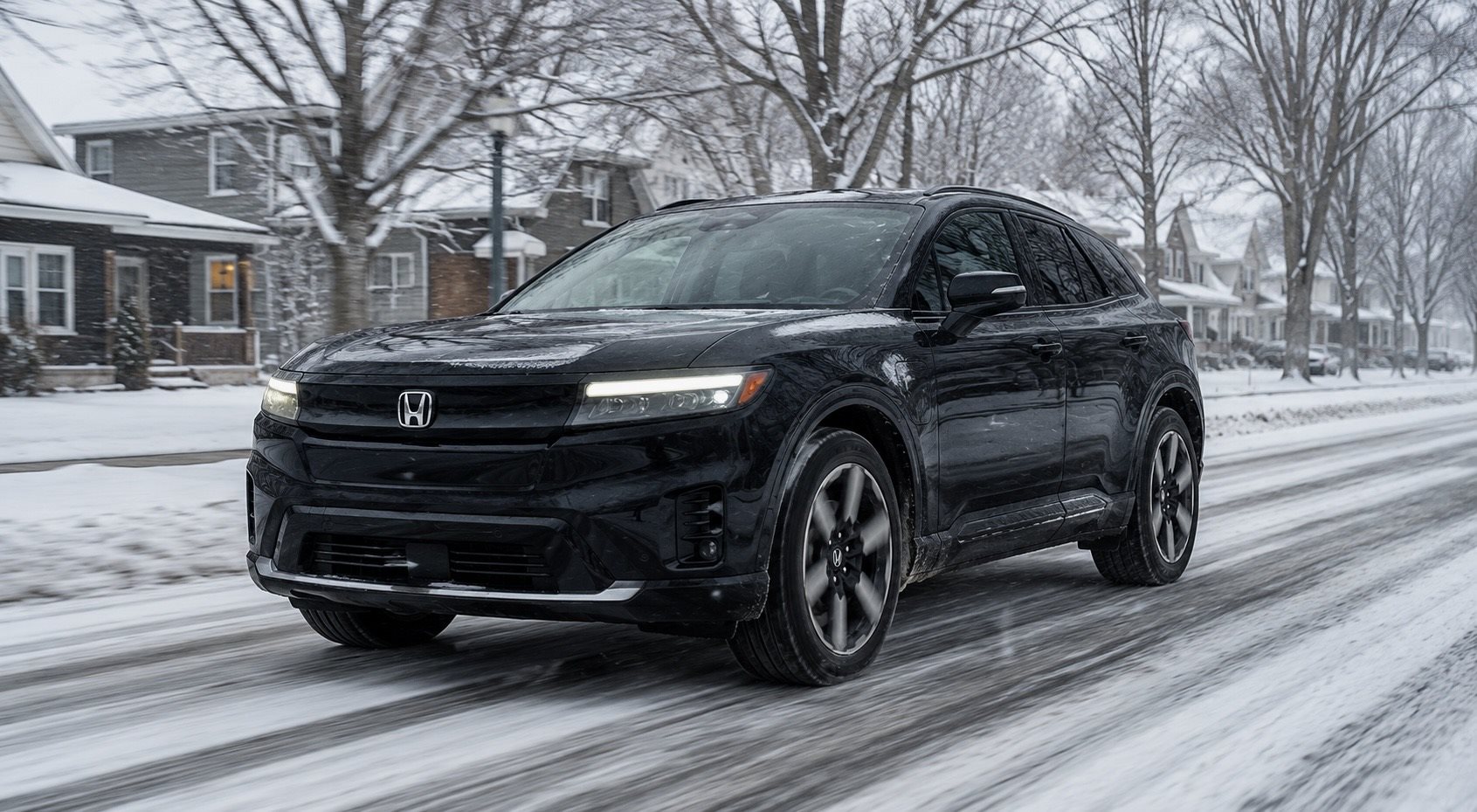
A few realities of northern-Illinois EV ownership, from the questions we hear most. Precondition while plugged in - it's the single best winter habit: use the Prologue's available remote-climate and charging-schedule features on wall power to warm the cabin (and, where supported, the battery) so you keep your range. Consider a dedicated set of winter tires; like any vehicle, the Prologue is far more capable in Lake County snow on proper winter rubber, and all-wheel-drive versions add traction on top of that. Expect the range readout to drop in a deep freeze and recover as it warms - that's normal EV behavior, not a fault. And plug in overnight in winter whenever you can - it helps preserve usable range and supports the battery's thermal management; follow Honda's recommended charge limits rather than routinely charging to 100 percent when you don't need to. None of this is difficult once it's routine, and most owners tell us the "always full every morning" convenience quickly outweighs the winter adjustments.
Frequently Asked Questions
Does the 2026 Honda Prologue qualify for the federal EV tax credit?
No. The $7,500 federal Clean Vehicle Tax Credit for new EVs generally is not available for vehicles acquired after September 30, 2025, so a new Prologue bought today does not qualify. (Limited transition relief may apply only to qualifying purchases completed on or before that date.) Honda's 2026 price reduction offset part of that change on the sticker itself.
How far can a Honda Prologue go on a full charge?
The 2026 Prologue is EPA-rated for up to 308 miles on the front-wheel-drive EX and Touring. All-wheel-drive EX and Touring versions are rated around 294 miles, and the top Elite around 283 miles. Real-world range is typically lower at highway speeds and in cold weather.
How much range does the Prologue lose in cold weather?
Like all EVs, the Prologue may lose roughly 20 to 30 percent of usable range in demanding winter conditions (a planning estimate - actual results vary substantially), and sometimes more with heavy cabin heating. Preconditioning while plugged in and garage parking help significantly. In a Lake County winter, plan on real-world range noticeably below the EPA figure on the coldest days.
How long does it take to charge a Honda Prologue?
On a 240-volt Level 2 home charger, a full charge from low takes roughly 7 to 11 hours (ideal overnight), adding up to about 34 miles per hour. On a DC fast charger, the Prologue goes from about 20 percent to 80 percent in around 35 minutes and can add roughly 65 miles in about 10 minutes.
Can the Honda Prologue use Tesla Superchargers?
With Honda's approved NACS-to-CCS DC fast-charging adapter, compatible Prologue models can use participating Tesla Supercharger locations open to Honda vehicles, in addition to CCS fast chargers. Not every location is compatible, and some may require app or account setup - but it meaningfully expands road-trip charging options.
How much does it cost to charge a Prologue at home in Illinois?
As an illustration, driving about 12,000 miles a year may require roughly 4,000-4,500 kWh from the wall; at an all-in cost of about $0.16-$0.20/kWh, that's roughly $640–$900 a year - typically well below the gasoline cost of a comparable SUV. ComEd time-of-use rates and overnight charging can lower it further. Actual cost depends on your rate plan and driving.
Is the Honda Prologue good in snow?
All-wheel-drive Prologue models add strong traction for Lake County winters, and the Elite comes with all-wheel drive standard. As with any vehicle, a set of dedicated winter tires makes the biggest difference in snow and ice.
Is the Honda Prologue the same as the Chevy Blazer EV?
They're close cousins - both are built on GM's Ultium platform - but not identical. The Prologue has Honda styling, Honda's warranty and dealer network, and a simpler lineup; the Blazer EV offers more configurations, including a longer-range battery and a performance SS model.
Does Illinois have an EV rebate in 2026?
In the FY2026 cycle, Illinois offered $4,000 to eligible low-income applicants and $2,000 to other income-eligible applicants, for vehicles at or below $80,000 - but it's only paid during open application windows while funding lasts, and the FY2026 window closed May 31, 2026. Any future cycle depends on new appropriations and program rules, so don't count on another window opening. Check epa.illinois.gov for the current status.
What warranty covers the Prologue's battery?
Honda covers the Prologue's high-voltage battery with an 8-year/100,000-mile limited warranty. New Prologues also include Honda Service Pass complimentary scheduled maintenance for the first 2 years or 24,000 miles.
Check Prologue Availability at Honda Libertyville
Contact Honda Libertyville to confirm current Prologue availability, incoming inventory, and test-drive options. Our team can walk you through the trims, explain home-charging options, and give you honest, current pricing - including whatever Prologue offers and financing are running right now. Serving Libertyville, Vernon Hills, Mundelein, Gurnee, Lake Forest, Grayslake, Waukegan, and all of Lake County.
Sales: (847) 595-5561
Address: 1111 S Milwaukee Ave, Libertyville, IL 60048
About Honda Libertyville
Honda Libertyville is a factory-authorized Honda dealer serving Lake County, Illinois and Chicago's northern suburbs, operated by Murgado Automotive Group from 1111 S Milwaukee Ave in Libertyville. We sell and service the full Honda lineup, including the all-electric Prologue, and our team can help you compare trims, arrange home charging, and understand the real ownership costs of going electric. New Honda purchases include Honda Service Pass complimentary scheduled maintenance for the first 2 years or 24,000 miles.
This guide is educational and reflects Honda's published specifications and EPA range ratings as of the date below. Vehicle pricing, specifications, incentives, and charging programs change frequently and vary by trim, options, and eligibility - confirm current details with Honda Libertyville, and consult a qualified tax professional about your eligibility for any tax credit or deduction. Published July 14, 2026 · Last reviewed July 14, 2026.