Reviewed by Honda Libertyville Service Center - Factory-authorized Honda dealer at 1111 S Milwaukee Ave, Libertyville, IL 60048. Our Honda-certified technicians use Honda diagnostic systems and service information to diagnose warning lights on applicable Honda vehicles, including Civic, Accord, CR-V, HR-V, Pilot, Passport, Odyssey, and Ridgeline models. The all-electric Honda Prologue uses a different warning and diagnostic system and is not covered by this check-engine-light guide. Last reviewed: September 14, 2026.
Is your Honda's check engine light steady or flashing?
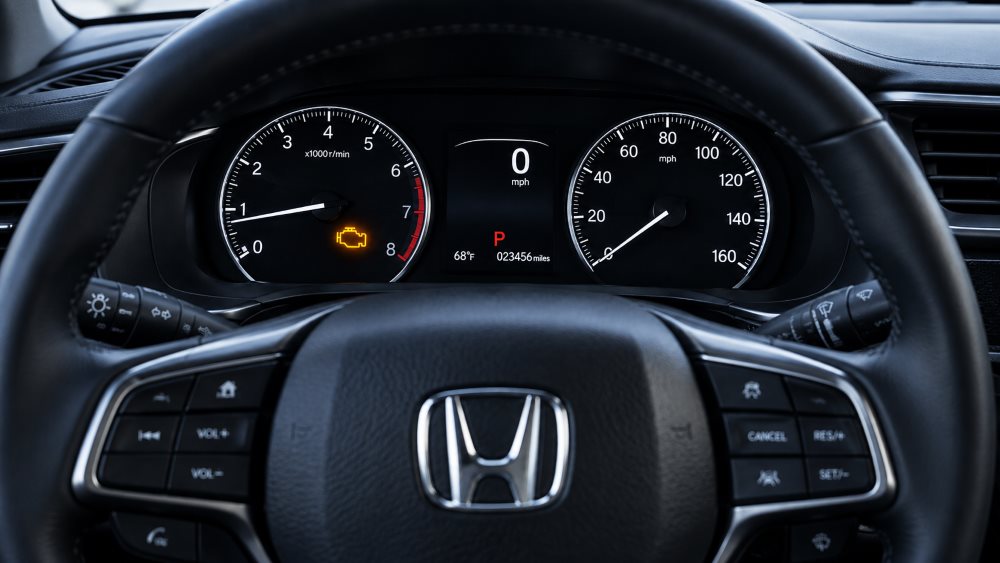
A steady amber check engine light, also called the Malfunction Indicator Lamp or MIL, means the vehicle has detected a problem involving the engine or emissions-control system. Honda owner's manuals instruct drivers to avoid high speeds and have the vehicle inspected promptly. If the light is steady and the vehicle otherwise feels normal, you may be able to drive carefully to a nearby service facility, but there is no universal "safe distance" that applies to every fault.
A flashing check engine light is more urgent. Honda states that the light flashes when engine misfiring is detected. Pull over in a safe location away from flammable material, stop the engine, and allow it to cool for at least 10 minutes. If the light flashes again after restarting, the safest course is to limit further driving and arrange professional assistance, especially if the engine is running roughly, losing power, overheating, or making unusual noises. Follow the instructions in the owner's manual for your specific Honda.
This guide covers common reasons a Honda check engine light may appear, why a basic code reading is not the same as a diagnosis, how Illinois emissions testing treats an illuminated malfunction indicator light, what cold weather can reveal about EVAP-system problems, and what professional diagnosis may cost.
What are common causes of a Honda check engine light?
A check engine light can have many causes. The examples below are common categories seen across modern vehicles, but the diagnostic trouble code and testing on your specific Honda are what determine the actual fault. A code identifies the system that detected a problem; it does not necessarily identify the part that should be replaced.
| Possible Cause | What It Affects | Important Diagnostic Note |
|---|---|---|
| Fuel-cap or EVAP-system leak | Fuel-vapor emissions system | On cap-equipped models, a loose or damaged cap can trigger an EVAP fault. Capless systems can develop EVAP leaks for other reasons. |
| Oxygen or air/fuel sensor fault | Fuel-mixture and emissions monitoring | A sensor-related code does not automatically mean the sensor itself has failed; wiring, exhaust leaks, fuel control, or another condition may be responsible. |
| Catalytic-converter efficiency fault | Emissions control | The converter should not be condemned from a code alone; engine-running problems and sensor faults can affect catalyst-efficiency readings. |
| Air-metering or intake-system fault | Air/fuel calculation and engine management | The relevant sensor and diagnostic procedure vary by Honda model, engine, and model year. |
| Ignition or other misfire-related fault | Combustion and emissions | Spark plugs and ignition coils are possible causes, but fuel-delivery, wiring, mechanical, and other faults can also produce a misfire. |
That is why repair prices are difficult to estimate from the warning light alone. The same check engine light can lead to a simple correction or a more involved repair. A proper diagnosis identifies the cause before parts are authorized.
Could it just be a loose gas cap?
On a Honda equipped with a conventional fuel cap, yes. A loose, incorrectly installed, missing, or damaged cap can allow fuel vapor to escape and cause the EVAP system to detect a leak. If your Honda has a removable cap, make sure it is installed correctly and inspect the seal for obvious damage.
Many newer vehicles use capless fuel-filler designs, so there may be no cap to tighten. A capless vehicle can still develop an EVAP-system fault from a valve, seal, hose, filler assembly, or another component.
If a loose cap was the cause, the check engine light may require several normal drive cycles before the vehicle confirms that the leak is gone and turns the light off. Do not repeatedly clear the code simply to extinguish the light, because doing so can erase useful diagnostic information and reset emissions-readiness monitors.
Why isn't a parts-store code reading enough?
A basic OBD-II code reading tells you which diagnostic trouble code is stored. It does not necessarily tell you which component has failed. The same oxygen-sensor, EVAP, catalyst, or misfire code can have several possible causes depending on the vehicle, mileage, operating conditions, and other data stored with the fault.
Reading the code is the beginning of diagnosis. A technician may need to review freeze-frame information, live sensor data, manufacturer-specific data, technical service information, wiring, and component tests before identifying the cause.
This is where replacing a part based only on the name of a code can become expensive. For example, an oxygen-sensor-related code can sometimes be caused by wiring, an exhaust leak, fuel-control problems, or another condition rather than by the sensor itself. Honda Libertyville technicians use Honda diagnostic equipment and service information appropriate to the vehicle, while a basic generic code reader may provide only part of the information needed for diagnosis.
Will a check engine light fail my Illinois emissions test?
For vehicles subject to Illinois emissions testing, an emissions-related malfunction that causes the Malfunction Indicator Lamp to illuminate and stores the associated diagnostic trouble code can cause an OBD emissions-test failure. Lake County is within the Illinois vehicle-emissions inspection area, although testing requirements and exemptions depend on the individual vehicle.
Readiness status matters too. If the vehicle's OBD system has not completed enough required emissions monitors, the vehicle may be rejected as "not ready" rather than receiving a normal passing test result. Clearing diagnostic codes or disconnecting the battery shortly before testing can reset readiness monitors, so simply turning the light off does not prepare the vehicle for an emissions inspection.
After a repair, the vehicle normally needs to be driven under the conditions required for its onboard monitors to run again. The required driving pattern varies by vehicle and monitor. Confirm current testing requirements through the Illinois Air Team before your test date.
Why can a check engine light appear during very cold weather?
Cold weather can expose problems that were less noticeable in warmer conditions. Temperature changes can affect rubber seals, fuel-vapor behavior, electrical connections, battery voltage, and other systems monitored by the vehicle.
EVAP-system faults are one possibility, but the temperature alone does not diagnose the cause. A warning that appears during a cold snap can still result from a loose or damaged fuel cap on a cap-equipped vehicle, an EVAP valve or seal, wiring, or another fault.
If the light disappears and later returns, especially under similar conditions, have the stored codes diagnosed rather than assuming the weather itself is the problem.
Can I drive with the check engine light on, and how far is safe?
There is no single mileage or time limit that is safe for every check engine light.
If the light is steady and the Honda is otherwise operating normally, avoid high speeds and hard acceleration and arrange an inspection promptly. Honda's owner guidance warns that continued operation with the malfunction indicator light on can damage the emissions-control system or engine. A nearby trip to a service facility may be reasonable depending on the circumstances, but a long highway drive or road trip should not be treated as automatically safe simply because the vehicle feels normal.
If the light is flashing, Honda identifies that condition with engine misfire detection. Stop in a safe place, shut off the engine, and allow it to cool. If the flashing returns after restart, or if the vehicle is running roughly, losing power, overheating, producing unusual smells or noises, or displaying another serious warning, avoid continued driving and seek roadside assistance or professional advice.
It is also possible for an emissions-related fault to illuminate the light while the vehicle appears to drive normally. That does not mean the fault should be ignored. Some emissions and sensor faults create few noticeable drivability symptoms initially.
It is also worth checking whether an open safety recall applies to your vehicle. Search your VIN through NHTSA's official recall lookup. Recall repairs covered by the applicable safety recall are performed according to the manufacturer's recall terms.
What does a Honda check engine light diagnostic cost?
RepairPal's national estimate, last updated September 2026, lists professional check engine light diagnosis and testing at approximately $125 to $183 on average before taxes, fees, location adjustments, and any related repairs. RepairPal currently lists an estimated $122 to $179 range for several Honda models, including the Accord. These are third-party estimates, not Honda Libertyville prices.
Honda Libertyville does not currently publish a universal flat fee on its website for every check-engine-light diagnosis, because diagnostic time can depend on the fault and vehicle. For current pricing for your specific Honda, call the service department at 872-258-0428. Ask your service advisor about the diagnostic charge, what it includes, and whether any current service offer applies before authorizing work.
Schedule a Diagnostic in Lake County
If your check engine light is on, our Honda-certified team can retrieve the stored diagnostic information, determine what additional testing is required, explain the findings for your specific Honda, and provide an estimate before repairs are authorized.
Service Department: 872-258-0428
Hours: Monday-Thursday 6:30 AM-7:00 PM | Friday 6:30 AM-6:30 PM | Saturday 7:30 AM-4:00 PM | Sunday Closed
Address: 1111 S Milwaukee Ave, Libertyville, IL 60048
For the full rundown of dashboard symbols beyond the check engine light, see our Honda dashboard warning lights guide. If a Maintenance Minder wrench icon is also showing, that is a maintenance reminder rather than the same type of fault warning - our Maintenance Minder codes guide explains what the individual codes mean.
About Honda Libertyville Service Center
Honda Libertyville is a factory-authorized Honda dealer serving Lake County, Illinois, operated at 1111 S Milwaukee Ave, Libertyville, IL 60048. Our Honda-certified technicians use Honda diagnostic resources, service information, and equipment appropriate to the vehicle to maintain and repair Honda models for customers throughout Libertyville and surrounding Lake County communities.
This guide provides general educational information and is not a diagnosis or a substitute for the owner's manual or vehicle-specific inspection. Warning-light behavior, recommended action, diagnostic procedures, and repair requirements can vary by model, model year, powertrain, fault, and vehicle condition. Third-party cost figures are national RepairPal estimates reviewed September 14, 2026 and are not Honda Libertyville pricing. Illinois emissions-testing requirements can change; confirm current requirements with the Illinois Air Team. Published August 27, 2026. Last reviewed September 14, 2026.