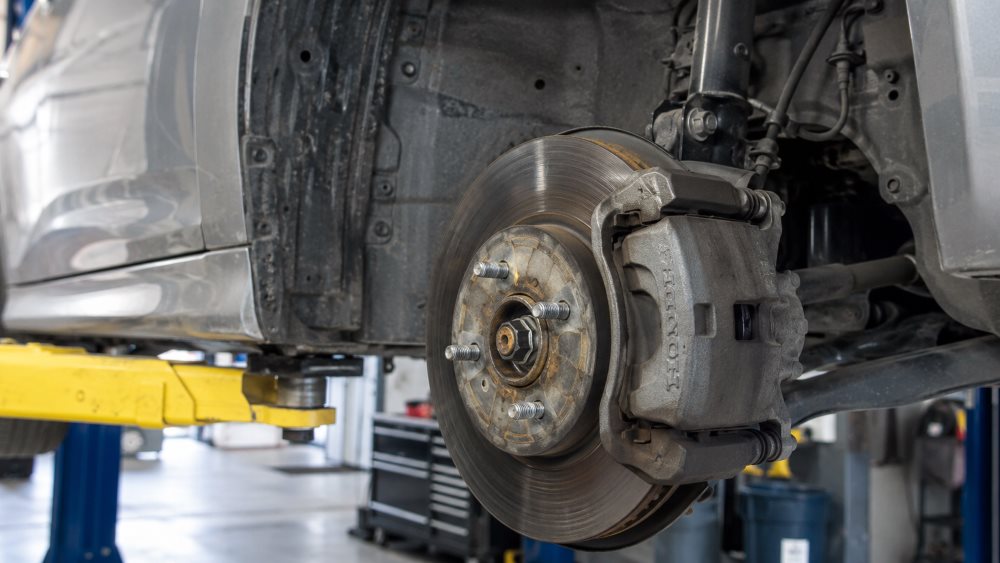
Honda brake service means inspecting - and, when needed, replacing - the parts that stop your Honda: brake pads, rotors, calipers and hardware, and the brake fluid that ties the system together. In Lake County, brakes work harder than the mileage alone suggests. Road salt, liquid deicing treatments, moisture, and stop-and-go winter driving can accelerate corrosion and contribute to uneven wear. There is no single mileage at which every Honda needs new pads - it depends on your model, how and where you drive, and the season - so the reliable approach is a periodic brake inspection. If you hear persistent squealing or grinding, feel a pulsation through the pedal, or notice a softer or longer-travel pedal, call our factory-trained team at 872-258-0415 to have it checked. If the pedal has little or no resistance or the vehicle does not stop normally, stop in a safe place and arrange professional assistance or towing.
Below, we cover what a brake service actually includes, what really drives pad life, the warning signs worth acting on, why Lake County's salt belt and freeze-thaw winters are especially hard on Honda brakes, how the picture changes for hybrids and the all-electric Prologue, and how to decide between a dealer and an independent shop. Everything here is written for Honda owners in Libertyville, Vernon Hills, Mundelein, Gurnee, and across Lake County.
What Honda Brake Service Includes
"Brake service" is not one job - it is a family of related services, and a good inspection tells you which of them your Honda actually needs. On most visits, the goal is to measure wear, check for corrosion and leaks, and service only what is due. Here is what our technicians look at.
| Component | What it does | What inspection and service involve |
|---|---|---|
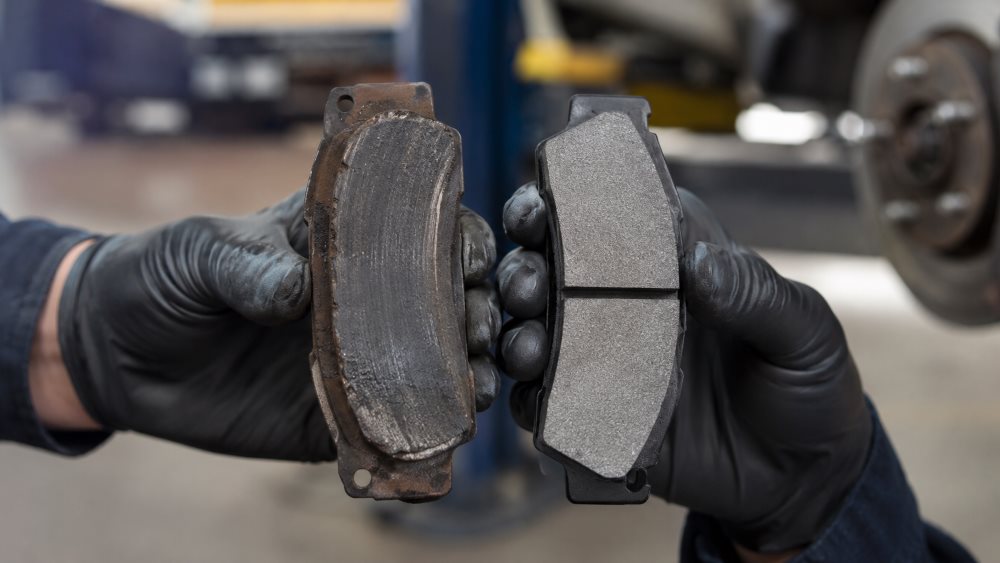
| Brake pads | Friction material that clamps the rotor to slow the wheel | Measure remaining thickness; replace when worn to Honda's service limit or when wear is uneven |
| Rotors (discs) | The metal disc the pads grip | Check thickness and runout, look for scoring, grooves, heat spots, and corrosion; resurface or replace based on condition |
| Calipers and slide pins | Press the pads against the rotor and release cleanly | Check for sticking, seized slide pins, torn boots, and leaks; clean, lubricate, or replace as needed |
| Hardware and shims | Clips, springs, and anti-rattle shims that keep pads seated and quiet | Inspect, clean, lubricate, and replace hardware or shims when required by the applicable procedure or when corroded, damaged, or no longer serviceable |
| Brake lines and hoses | Carry hydraulic pressure to each wheel | Inspect steel lines and rubber hoses for corrosion, cracking, and weeping - a priority in the salt belt |
| Brake fluid | The hydraulic medium that transfers pedal force | Check level and condition; replace on Honda's time-based schedule because fluid absorbs moisture over time |
In our Lake County service bay, a large share of brake visits start as an inspection - a customer hears a noise or feels something change - and end with servicing only one or two of these items rather than the whole system. That is the point of measuring before replacing.
What Affects How Long Honda Brake Pads Last
The single most common brake question we hear is "how long do Honda brake pads last?" The honest answer is that it varies widely, and anyone who quotes you one number for every Honda is guessing. Pad life depends on several things that are very much in play for Lake County drivers.
- Where you drive. Stop-and-go city and suburban driving - think school runs, Milwaukee Avenue, and the daily commute - wears pads faster than steady highway miles, because the brakes do far more work per mile.
- Front vs. rear. Most of a Honda's braking happens up front, so front pads typically wear faster than rear - though on some models and driving styles the rears can surprise you.
- Vehicle weight and load. A loaded Pilot, Passport, Odyssey, or Ridgeline - especially when towing or carrying a full family - asks more of its brakes than a lightly loaded Civic.
- Driving style. Hard, late braking wears pads and heats rotors far more than smooth, early braking that lets the car coast down.
- Regenerative braking. Honda hybrids and the Prologue EV recover energy by slowing with the electric motor, which means the friction pads often do less work and can last longer - with a Lake County caveat we cover below.
- Corrosion. In the salt belt, rotors and hardware can degrade from corrosion before the pads are fully worn, which changes the service the car needs.
Because of all this, our technicians measure remaining pad thickness against Honda's service specification rather than relying on a mileage rule of thumb. A brake inspection at each service visit - which Honda's Maintenance Minder already builds into its B-service inspections - is the most reliable way to know where you actually stand. You can read more about how those codes work in our Honda Maintenance Minder codes guide.
Warning Signs Your Honda May Need Brake Service
Honda builds in a few ways for your car to tell you the brakes need attention. Some are designed to get louder as pads wear; others show up as a change in how the pedal or the car feels. Here is how to read them.
| What you notice | What it often means | What to do |
|---|---|---|
| High-pitched squeal when braking | Many Hondas use a mechanical wear indicator that squeals when pads get low | Schedule a brake inspection soon; it is an early warning, not an emergency |
| Grinding or metal-on-metal sound | Pads may be fully worn and contacting the rotor | Have it inspected promptly; continuing to drive can damage rotors |
| Pulsation or shudder through the pedal | Often rotor thickness variation or corrosion, sometimes from long parking in wet, salty conditions | Have the rotors measured; resurfacing or replacement may be recommended |
| Soft, low, or longer-travel pedal | Possible fluid, hydraulic, or air-in-line issue | If the pedal has little or no resistance, braking performance is reduced, or the vehicle does not stop normally, stop in a safe place and arrange professional assistance or towing |
| Pulling to one side when braking | Can indicate a sticking caliper or uneven wear, common when a slide pin corrodes | Schedule an inspection; caliper service may be needed |
| Brake warning light on the dash | The meaning depends on whether the red brake-system, amber brake-system/electric-parking-brake, or ABS indicator is illuminated | If a red brake-system warning remains on after the parking brake is released, or appears with an abnormal pedal, reduced braking, or an ABS warning, stop safely and follow the owner's manual; otherwise arrange diagnosis promptly |
Note: A brief, light surface squeal on the first stop of a cold, damp Lake County morning may be caused by overnight rotor surface rust and can clear within the first few stops. Persistent squealing, grinding, pulling, reduced braking, or any abnormal pedal feel requires attention. If braking performance is reduced or the pedal has little or no resistance, stop in a safe place and arrange professional assistance. For a full rundown of dashboard symbols, see our Honda dashboard warning lights guide.
Why Lake County Salt and Winters Are Hard on Honda Brakes
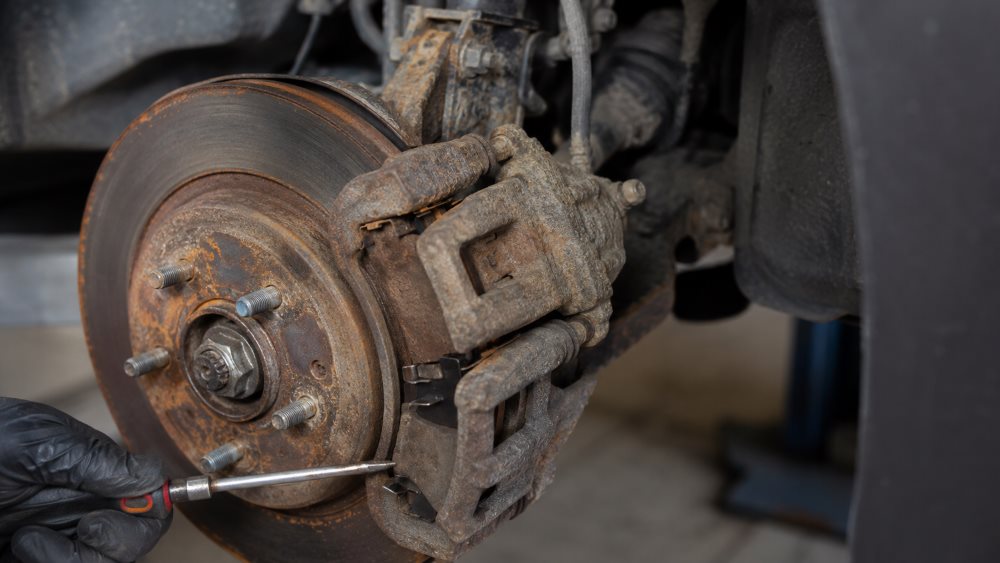
This is the part most generic brake guides skip, and it is exactly why brake wear in Lake County does not always track the way a national mileage chart suggests. Lake County and Illinois transportation agencies use road salt and liquid anti-icing or deicing treatments during winter operations. Salt residue, moisture, and repeated freeze-thaw cycles can contribute to corrosion of exposed steel brake components.
Salt corrodes brake lines, hardware, and rotor surfaces
Steel brake lines, caliper brackets, mounting hardware, and rotor surfaces all sit in the direct path of salt spray thrown up from the road. Over Lake County winters, that can lead to surface rust and, over time, scale and pitting. Brake-line corrosion in particular is a well-documented salt-belt concern, which is why our inspections in the winter and spring pay close attention to the lines and hoses, not just the pads. Catching a corroding line early is far better than discovering it later.
Slide pins and calipers can seize
Calipers rely on slide pins that must move freely so the pads apply and release evenly. Salt and moisture can corrode those pins and dry out their lubrication, causing a caliper to stick. A sticking caliper wears one pad faster than the other, can cause pulling or a warm wheel, and puts extra load on the rotor. This is one of the more common salt-belt brake issues we see, and it is why caliper and hardware service - not just new pads - is often part of a proper Lake County brake job.
Short trips and freeze-thaw make it worse
Downtown-style and suburban short trips are common here, and they do not always let the brakes fully dry and heat-cycle. Moisture and salt residue linger on rotors between drives, and Lake County's freeze-thaw swings accelerate corrosion. A Honda that sits outside all week and takes short trips can show more rotor and hardware corrosion than a similar Honda that sees regular highway miles - even at the same odometer reading.
The pads can outlast the hardware
Put those factors together and you get a pattern unique to salt-belt driving: the friction material on the pads may still have life left while the rotors, hardware, or slide pins have corroded enough to need attention. That is why we measure and inspect the whole corner rather than assuming that healthy-looking pads mean the brakes are fine.
Honda Brake Service by Model
Brake fundamentals are the same across the lineup, but the load, the hardware, and the way each Honda is driven change what to watch for. Here are the notes that matter most for the models we see most often in Lake County.
Honda Civic
The Civic is light and easy on brakes relative to Honda's SUVs, and many owners rack up steady, uneventful pad life. Performance-oriented Si and Type R trims use larger brakes and are often driven harder, so their wear reflects how they are used. For all Civics, the salt-belt items - rotor surface corrosion and hardware - deserve the same attention as pad thickness.
Honda Accord and Accord Hybrid
The Accord and Accord Hybrid use four-wheel disc brakes with an electronic parking brake on current models. The Accord Hybrid adds regenerative braking, so its friction pads often do less work and can last longer - which is exactly why we watch its rotors and slide pins closely for corrosion from lighter friction use in a salty climate. The electronic parking brake also means rear brake service should be done with the correct tools and procedure.
Honda CR-V and CR-V Hybrid
The CR-V is one of the most common Hondas on Lake County roads, and current versions pair four-wheel discs with an electronic parking brake and hill-hold. The CR-V Hybrid's regenerative braking again tends to stretch pad life while making rotor and caliper corrosion the thing to watch. As a family SUV that lives in stop-and-go traffic, the CR-V benefits from consistent brake inspections.
Honda HR-V
The HR-V is a smaller SUV that lives much of its life in city and suburban driving, which is harder on brakes per mile than highway cruising. Regular inspection keeps pad wear, rotor condition, and hardware corrosion in view before any of them becomes a bigger job.
Honda Pilot and Passport
The three-row Pilot and midsize Passport are heavier and often carry more people and gear, so their brakes work harder - especially when towing or fully loaded. Heavier braking means more heat and, over time, more wear on pads and rotors. For families who tow a trailer or boat around Lake County in the summer, a pre-season brake inspection is a smart habit.
Honda Odyssey
The Odyssey is a heavy minivan that spends its life in exactly the kind of loaded, stop-and-go family driving that is hardest on front brakes. Combine that with Lake County salt, and the Odyssey is a model where staying ahead of brake wear and hardware corrosion pays off.
Honda Ridgeline
The Ridgeline carries and tows more than a car-based Honda, and that load shows up at the brakes. As with the Pilot and Passport, towing and payload increase brake work and heat, so its brakes deserve inspection in line with how hard it is used - plus the same salt-belt attention to lines and hardware.
Honda Prologue (Electric)
The all-electric Prologue uses regenerative braking, so in normal driving the friction brakes may be used less frequently. That can extend pad life, but the friction system still requires inspection: rotors can develop surface rust or corrosion, and caliper hardware and slide pins can deteriorate in a salty environment. Follow the Prologue owner's manual and have persistent noise, vibration, visible corrosion, warning indicators, or changes in braking performance evaluated by a qualified technician. If you are researching the Prologue, see our Honda Prologue EV buyer's guide.
Brake Fluid: The Service Honda Owners Forget
Brake fluid rarely gets attention because there is no noise and no obvious symptom until it matters - but it is central to how your brakes work. Brake fluid is hygroscopic, meaning it absorbs moisture from the air over time. As it does, its boiling point drops and it can promote internal corrosion in the calipers, ABS unit, and lines. That is why Honda specifies brake fluid replacement on a time-based schedule rather than a mileage one.
Honda generally recommends replacing brake fluid on a time-based interval regardless of mileage, and your Maintenance Minder and owner's manual are the authority for your specific model and year. In a climate like Lake County's, where humidity and temperature swing across the seasons, keeping fluid fresh is easy protection for a firm, consistent pedal. If your Maintenance Minder is showing a service code and you are not sure what it covers, our Maintenance Minder codes guide breaks down each one.
Dealer vs. Independent Shop for Honda Brakes
We are a Honda dealer, so you would expect us to say the dealer is always the answer. We will not - because it is not always true, and telling you straight is more useful.
An independent shop is genuinely fine for straightforward pad and rotor replacement on an older Honda with conventional brakes, especially if you have a trusted local mechanic. Good independents do solid brake work every day.
An authorized Honda dealer may be the appropriate choice for diagnosis or repair of a condition that may be covered by Honda's factory warranty, models with an electronic parking brake that requires the correct service procedure, work requiring Honda-specific programming or model-specific calibration procedures, hybrid and EV brake-system diagnosis, and situations where you want Genuine Honda parts matched to your vehicle. Routine maintenance or repairs performed by a qualified independent shop do not, by themselves, automatically void the factory warranty. Warranty coverage remains subject to the applicable warranty terms and the cause of the condition being repaired.
Honda Libertyville offers online scheduling. Pickup and delivery may also be available for qualifying service appointments within the eligible service area. Availability, distance limits, purchase requirements, expiration dates, and other terms may change, so confirm current eligibility and complete offer terms when scheduling. The right choice depends on your specific Honda, the work required, and the results of an inspection.
Frequently Asked Questions
How often should I get my Honda's brakes inspected?
A good rule is to have the brakes inspected at each regular service visit. Honda's Maintenance Minder already includes a brake inspection in its B-service scope, so following your Maintenance Minder keeps you on a sensible rhythm. In the salt belt, an inspection in late winter or spring is especially worthwhile because that is when corrosion tends to show up.
How long do Honda brake pads last?
It varies widely by model, driving style, load, and conditions, so there is no single mileage that fits every Honda. City and suburban stop-and-go driving wears pads faster than highway miles, and hybrids and EVs often stretch pad life through regenerative braking. The reliable way to know is to have the pad thickness measured against Honda's service limit rather than relying on a mileage estimate.
Do I need to replace the rotors every time I replace the pads?
Not necessarily. Rotors are serviced based on their measured thickness and condition - they can sometimes be resurfaced, sometimes reused, and sometimes need replacement, particularly if corrosion or thickness variation is present. In the salt belt, rotor condition is worth measuring rather than assuming.
Why do my Honda's brakes squeal or rust after winter?
A light squeal on the first stops of a damp, cold morning may be caused by overnight rotor surface rust and can clear within a few stops. A persistent squeal often points to a mechanical wear indicator telling you the pads are getting low, or to hardware that has corroded. If it does not clear or you hear grinding, have it inspected.
Does my Honda Hybrid or Prologue EV need brake service if regenerative braking does most of the work?
Yes. Regenerative braking can make the friction pads last longer, but the pads, rotors, calipers, hardware, and brake fluid still require periodic inspection. Follow the owner's manual and have persistent noise, vibration, warning indicators, visible corrosion, or changes in braking performance evaluated by a qualified technician.
What does the brake warning light on my Honda dashboard mean?
The meaning depends on which indicator is illuminated. A red brake-system warning, an amber brake-system or electric-parking-brake warning, and the ABS indicator do not all mean the same thing. If a red brake-system warning remains on after the parking brake is released, or appears with an abnormal pedal, reduced braking, or an ABS warning, stop safely and follow the owner's manual. Otherwise, arrange diagnosis promptly. Our dashboard warning lights guide explains the brake and related symbols in more detail.
How often should Honda brake fluid be replaced?
Honda specifies brake fluid replacement on a time-based interval regardless of mileage, because the fluid absorbs moisture over time. Your Maintenance Minder and owner's manual give the exact interval for your model and year. Keeping the fluid fresh helps maintain a firm, consistent pedal.
Is it safe to drive my Honda with squealing brakes?
A light, intermittent squeal may be an early wear indicator or temporary surface rust, but it should be inspected if it persists. Grinding, pulling, reduced braking, a warning indicator, or any abnormal pedal feel require prompt attention. If the pedal has little or no resistance or the vehicle does not stop normally, stop in a safe place and arrange professional assistance or towing.
Can I get Honda brakes done at an independent shop, or does it have to be the dealer?
Straightforward brake work can be performed by a qualified independent shop. An authorized Honda dealer may be the appropriate choice for diagnosis or repair of a condition that may be covered by the factory warranty, work requiring Honda-specific programming or service procedures, certain newer or electrified brake systems, and situations where you want Genuine Honda parts matched to your vehicle. Using a qualified independent shop for routine maintenance or repairs does not, by itself, automatically void the factory warranty.
Schedule Honda Brake Service in Lake County
If your Honda is squealing, grinding, pulsing, or just due for a look, our factory-trained team is ready to inspect it and recommend service based on measured condition and applicable Honda specifications. We service the full Honda lineup - Civic, Accord, CR-V, HR-V, Pilot, Passport, Odyssey, Ridgeline, hybrids, and the Prologue - using Genuine Honda parts where specified or selected.
Service: 872-258-0415
Address: 1111 S Milwaukee Ave, Libertyville, IL 60048-3799
Schedule online anytime, or call to find a time that works. Pickup and delivery may be available for qualifying appointments within the eligible service area; availability, distance limits, purchase requirements, expiration dates, and other terms may change. Final recommendations depend on your vehicle's model year, measured component condition, applicable Honda specifications, and the results of the inspection.
About Honda Libertyville Service Center
Honda Libertyville is a factory-authorized Honda dealer serving Lake County, Illinois and Chicago's northern suburbs, operated by Murgado Automotive Group from 1111 S Milwaukee Ave in Libertyville. Our service department is staffed by factory-trained technicians using Honda-approved diagnostic equipment, model-specific procedures, and Genuine Honda parts where specified or selected. We service brakes on the full Honda lineup, including models with electronic parking brakes, hybrids, and the all-electric Prologue, and inspect for corrosion patterns associated with salt-belt driving.
This guide is intended as general educational information and is not a substitute for the owner's manual or a vehicle-specific inspection. Brake condition varies by model, model year, driving habits, load, environment, maintenance history, and vehicle condition. Final recommendations depend on measured component condition, applicable Honda specifications, and the results of the inspection. If braking performance is reduced or the pedal has little or no resistance, stop in a safe place and arrange professional assistance. Published July 27, 2026 - Last reviewed July 27, 2026.